
The Office of Global Affairs (OGA) successfully hosted the final Travel Without a Passport session of the semester, featuring the vibrant culture of Vietnam. Held at Jianguo Campus, Zhizhu Café 2, the event brought together Taiwanese and international students for an evening of cultural sharing, interactive learning, and culinary experiences. As the concluding session of this semester’s Travel Without a Passport series, the event attracted many enthusiastic participants who were eager to discover more about Vietnam’s traditions, lifestyle, and cuisine. Through informative presentations and hands-on activities, students were given the opportunity to experience Vietnamese culture beyond what they see in textbooks or on social media, while strengthening friendships and promoting intercultural understanding within the university community.
The event began with a cultural presentation by the Vietnamese students, who introduced various aspects of life in Vietnam. They shared interesting insights into the country’s daily lifestyle, customs, and traditions, allowing participants to gain a better understanding of what everyday life is like for Vietnamese people. The presenters also talked about Vietnamese hospitality, family values, and the unique characteristics that make Vietnam a culturally rich and diverse country.
One of the most entertaining parts of the presentation was the discussion about Vietnam’s famous traffic culture. The presenters humorously described how motorcycles fill the streets and how experienced riders skillfully navigate through busy traffic. They jokingly compared the riders to “ninjas” because many people wear jackets, gloves, sunglasses, and face coverings to protect themselves from the sun and dust while expertly weaving through traffic. This topic brought plenty of laughter to the audience while also giving participants a realistic glimpse into daily life in Vietnam.
The presentation also explored the Vietnamese language and its fascinating history. Students learned that although modern Vietnamese uses the Latin alphabet, the language contains a large number of Sino-Vietnamese words due to over one thousand years of Chinese influence throughout Vietnam’s history. Many words share similar meanings and pronunciations with Mandarin Chinese, making it possible for Chinese speakers to recognize certain vocabulary. The presenters explained how the Vietnamese writing system evolved over time, transitioning from Chinese characters and Chữ Nôm to the Latin-based alphabet used today. This historical background helped participants understand the cultural connections between Vietnam and its
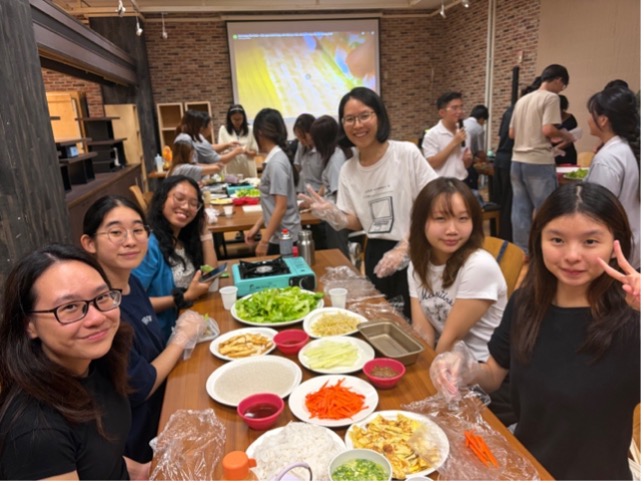
Following the presentation, participants enjoyed one of the most anticipated parts of the event—a hands-on cooking workshop. The Vietnamese students guided everyone through the preparation of two iconic Vietnamese dishes: fresh spring rolls and Bánh Xèo, the famous crispy Vietnamese savory pancake. Participants were able to prepare the ingredients, wrap their own spring rolls, and experience the cooking process of Bánh Xèo while learning about the significance of these dishes in Vietnamese cuisine.
The cooking session created an energetic and welcoming atmosphere as students worked together, exchanged conversations, and helped one another throughout the activity. Taiwanese students and international students naturally mingled around the cooking stations, sharing laughter, asking questions, and learning from the Vietnamese presenters. The activity encouraged teamwork and communication, allowing participants to build new friendships while experiencing Vietnamese culture in a fun and meaningful way.
Once the dishes were completed, everyone gathered to enjoy the food together. Sharing a meal became one of the highlights of the evening, as students chatted comfortably while tasting the authentic Vietnamese dishes they had prepared themselves. The room was filled with laughter and lively conversations, reflecting the success of the event in creating genuine cultural interaction. Many participants expressed that learning through cooking made the experience more memorable and enjoyable than simply listening to a presentation.
The Travel Without a Passport: Vietnam session successfully concluded this semester’s Travel Without a Passport series with a memorable and meaningful cultural experience. Through engaging presentations, historical and linguistic insights, interactive discussions, and hands-on cooking activities, participants gained a deeper appreciation of Vietnam’s unique culture and traditions. More importantly, the event demonstrated how food and cultural experiences can bring people together regardless of their backgrounds.
As students gathered around the table to cook, eat, and share stories, the event fostered meaningful friendships and strengthened the bond between Taiwanese and international students. Learning and dining together created an inclusive environment where everyone felt welcomed and connected. Overall, the event not only celebrated Vietnamese culture but also fulfilled the purpose of the Travel Without a Passport series by promoting cultural appreciation, global awareness, and lasting intercultural friendships within the Tzu Chi University community.